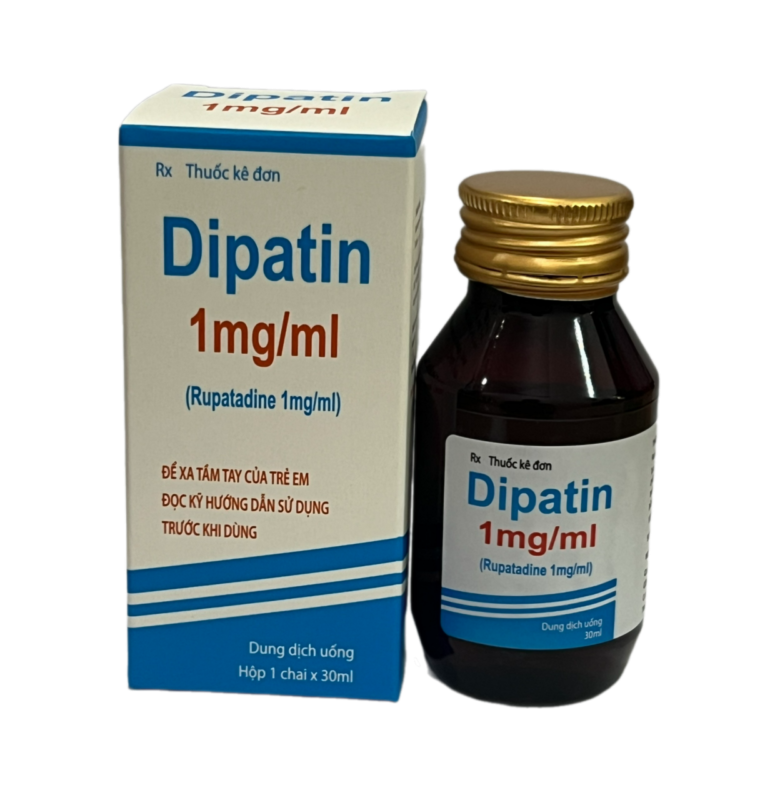
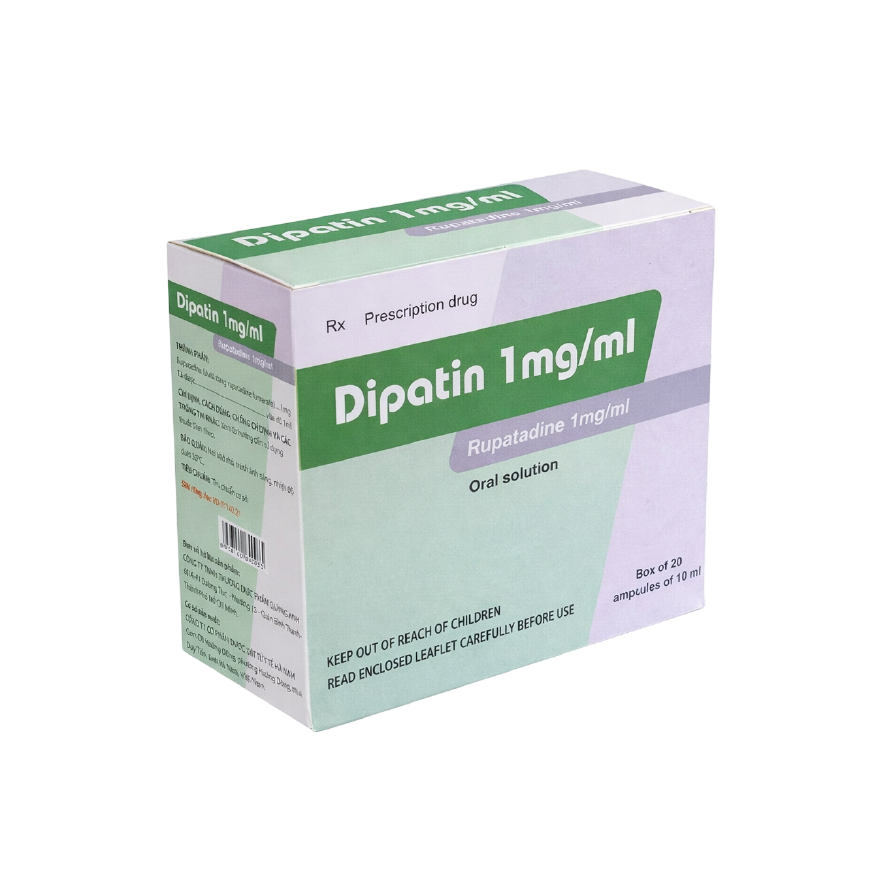
 +
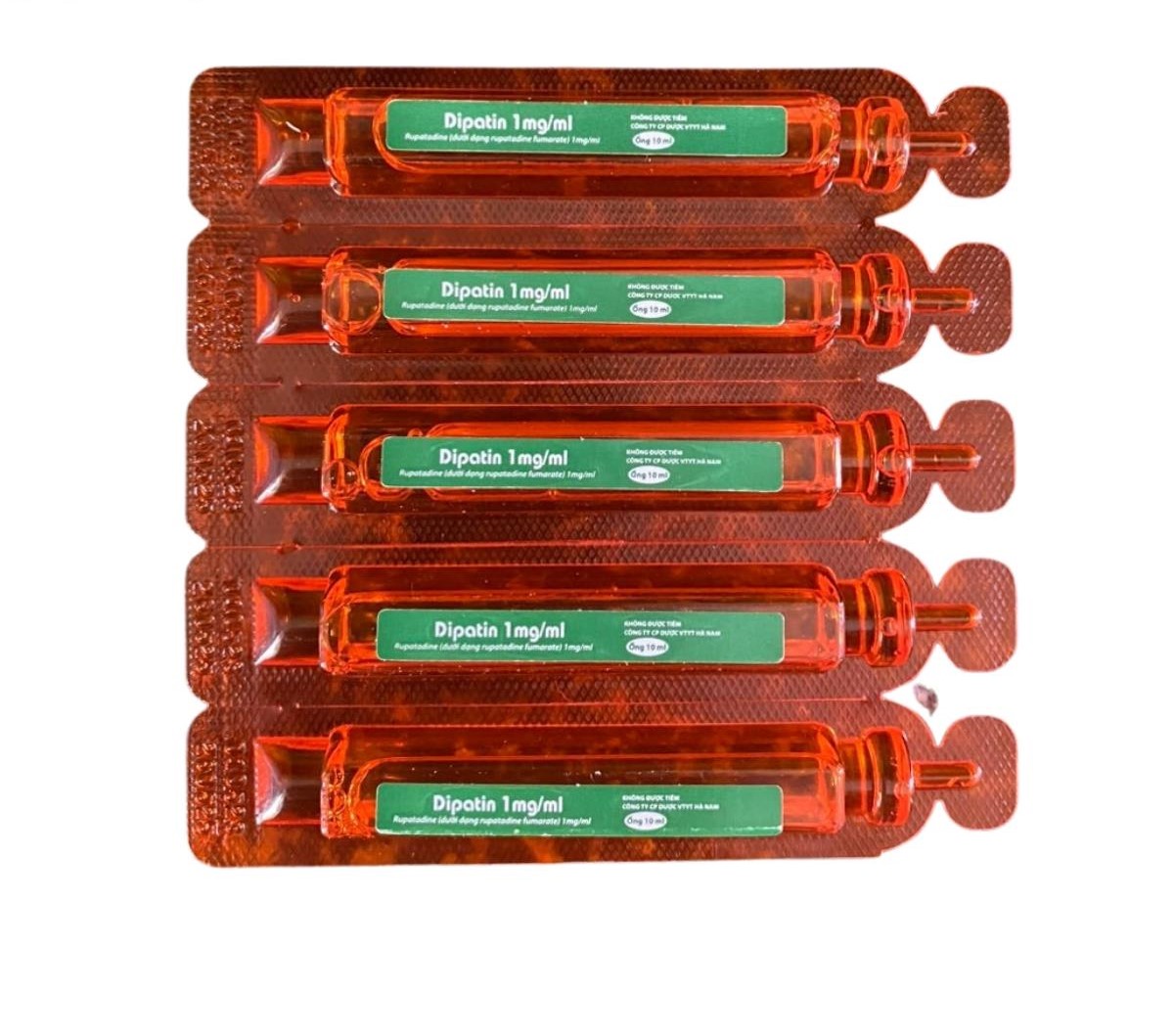
+ 
Product Information
1. Composition
Dipatin 1 mg/mL contains:
- Active substance: Rupatadine 1 mg (as rupatadine fumarate).
Excipients (q.s.): Propylene glycol, disodium phosphate anhydrous, citric acid anhydrous, sodium saccharin, sucrose, propyl paraben, quinoline yellow (E104), methyl paraben, banana flavour, purified water.
Pharmaceutical form: Syrup.
2. Pharmacological Properties and Indications
2.1 Pharmacodynamics
Rupatadine is a second-generation antihistamine with long-lasting activity and selective antagonism of peripheral H1 receptors. Some metabolites (such as desloratadine and hydroxylated derivatives) retain antihistaminic activity and may contribute to the overall therapeutic effect.
In vitro studies have shown that at high concentrations, rupatadine inhibits mast cell degranulation induced by immunological and non-immunological stimuli, as well as the release of cytokines, particularly TNF-α, from mast cells and monocytes. The clinical relevance of these findings remains to be fully established.
Pharmacokinetics
Pediatric population:
In children aged 2–5 years and 6–11 years, rupatadine is rapidly absorbed, with mean peak plasma concentrations (Cmax) of 1.9 ng/mL and 2.5 ng/mL, respectively, after repeated dosing.
Total exposure (AUC) was 10.4 ng·h/mL (2–5 years) and 10.7 ng·h/mL (6–11 years), comparable to values observed in adolescents and adults.
The elimination half-life was 16.9 hours in children aged 2–5 years and 12.3 hours in children aged 6–11 years.
Adults:
In an excretion study, 34.6% of rupatadine was recovered in urine and 60.9% in feces within 7 days. Rupatadine undergoes extensive metabolism after oral administration, with negligible amounts of unchanged drug detected.
Active metabolites, including desloratadine and hydroxylated derivatives, account for approximately 27% and 48% of total systemic exposure, respectively.
In vitro studies indicate that rupatadine is primarily metabolized by cytochrome P450 CYP3A4.
2.2 Indications
Dipatin 1 mg/mL is indicated for:
- Allergic rhinitis (including chronic allergic rhinitis).
- Urticaria.
3. Dosage and Administration
3.1 Dosage
Use as directed by a physician or refer to the following:
| Population | Dosage |
|---|---|
| Adults and adolescents (>12 years) | 10 mL (10 mg) once daily, with or without food. |
| Children (2–11 years) | |
| Body weight < 25 kg | 5 mL (5 mg) once daily. |
| Body weight ≥ 25 kg | 10 mL (10 mg) once daily. |
Use in children under 2 years of age is not recommended due to insufficient data.
Hepatic/Renal impairment:
Not recommended due to lack of clinical data.
3.2 Method of Administration
Separate one single-dose container, twist off the plastic cap, and administer orally before meals according to the prescribed dose.
4. Contraindications
- Hypersensitivity to any component of the formulation.
5. Undesirable Effects
Possible adverse effects include:
- Sinusitis, upper respiratory tract infection, influenza.
- Headache, somnolence, dizziness.
- Eosinophilia, neutropenia.
- Nausea, eczema, night sweats, fatigue.
Patients should inform their physician if any abnormal symptoms occur.
6. Drug Interactions
CYP3A4 inhibitors:
Co-administration with strong inhibitors (e.g., itraconazole, ketoconazole, voriconazole, posaconazole, HIV protease inhibitors, clarithromycin, nefazodone) or moderate inhibitors (e.g., erythromycin, fluconazole, diltiazem) should be avoided or used with caution.
Co-administration with ketoconazole may increase rupatadine plasma levels approximately 10-fold, and with erythromycin by 2–3 fold.
Other interactions:
- Narrow therapeutic index drugs: limited data available.
- CNS depressants: potential additive effects cannot be excluded.
- Statins: caution is advised due to possible CYP3A4-mediated interactions.
Food and beverages:
- Grapefruit juice: increases rupatadine levels (~3.5-fold); avoid concomitant use.
- Alcohol: may enhance central nervous system effects at higher doses.
7. Warnings and Precautions
7.1 General precautions
- Avoid use with strong CYP3A4 inhibitors; caution with moderate inhibitors.
- Dose adjustment may be required for sensitive CYP3A4 substrates (e.g., simvastatin, lovastatin, ciclosporin, tacrolimus, everolimus, cisapride).
- Avoid grapefruit juice.
- Use with caution in patients with QT prolongation, uncorrected hypokalemia, clinically significant bradyarrhythmias, or recent myocardial infarction.
Laboratory abnormalities (elevated CPK, ALT, AST) have been rarely reported.
Contains sucrose; may be harmful to teeth. Not suitable for patients with fructose intolerance or glucose-galactose malabsorption.
Follow prescribed dosage; do not exceed recommended dose.
No significant effect on the ability to drive or operate machinery.
7.2 Use in Pregnancy and Lactation
- Contraindicated during the first trimester of pregnancy.
- Excreted in breast milk; caution is advised in breastfeeding women.
7.3 Overdose
No cases reported; use only as directed to avoid potential complications.
7.4 Storage
- Store below 30°C.
- Protect from light and moisture.
- Keep in a cool, dry place.
- Keep out of reach of children.
8. Manufacturer / Packaging
Packaging: Box of 20 single-dose containers × 10 mL.