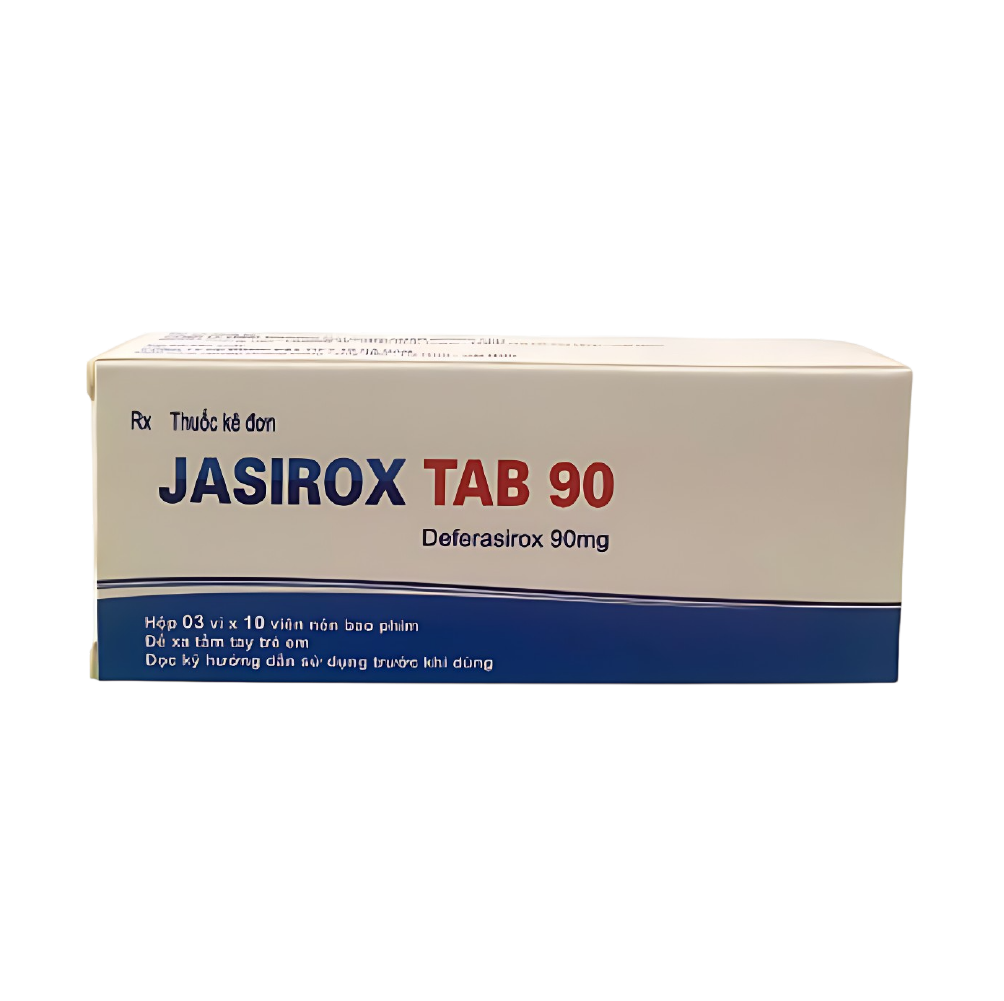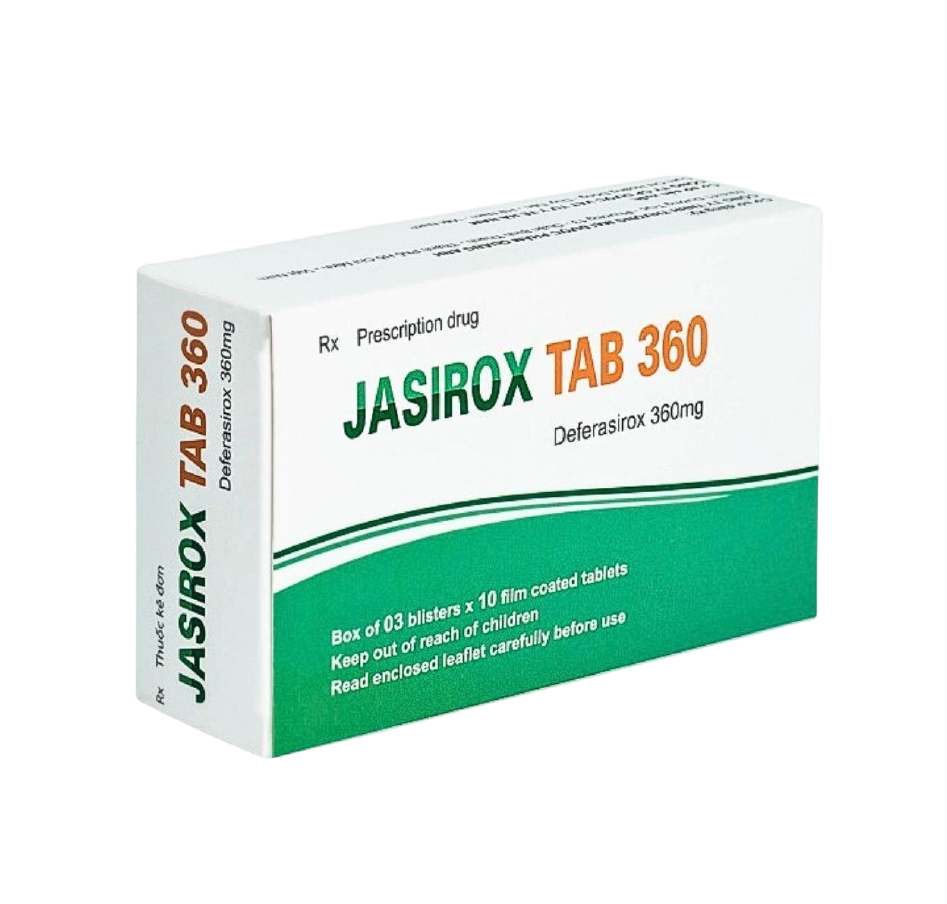
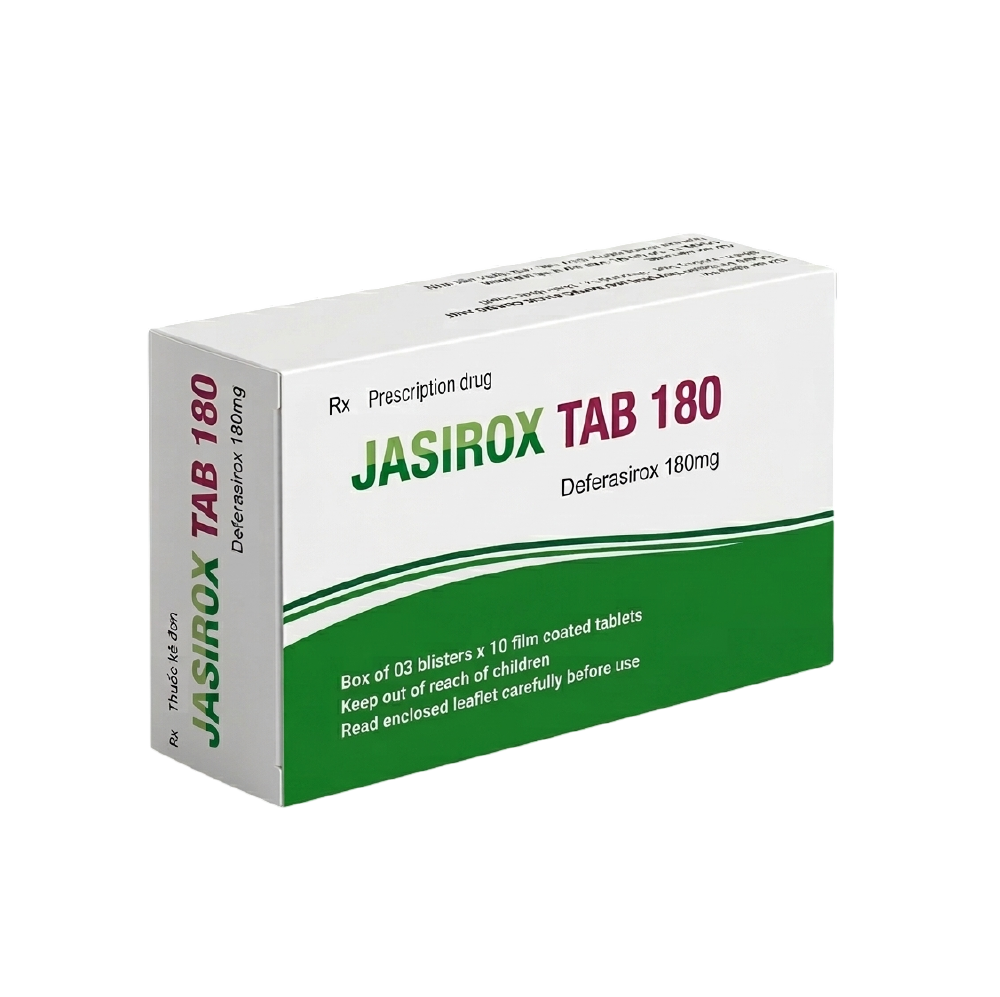
 +
+ Product Information
COMPOSITION
Each film-coated tablet contains:
- Deferasirox 180 mg
Excipients: q.s. to one tablet.
INDICATIONS
- Treatment of chronic iron overload due to frequent blood transfusions in patients with β-thalassemia major aged ≥ 6 years.
- Treatment of chronic iron overload due to transfusions when deferoxamine therapy is contraindicated or inadequate in the following patients:
- Pediatric patients (2–5 years) with β-thalassemia major and iron overload due to frequent transfusions.
- Adult and pediatric patients (≥ 2 years) with β-thalassemia major and iron overload due to infrequent transfusions.
- Adult and pediatric patients (≥ 2 years) with other anemias requiring transfusions.
- Treatment of chronic iron overload requiring chelation therapy when deferoxamine is contraindicated or inadequate in patients with non–transfusion-dependent thalassemia syndromes aged ≥ 10 years.
DOSAGE AND ADMINISTRATION
Adults – Transfusional Iron Overload
- Initial dose: 14 mg/kg once daily.
- Higher initial dose: 21 mg/kg/day in patients requiring greater iron reduction or receiving > 14 mL/kg/month of packed red blood cells (≈ > 4 units/month in adults).
- Lower initial dose: 7 mg/kg/day in patients not requiring significant iron reduction or receiving < 7 mL/kg/month (≈ < 2 units/month).
Dose adjustment:
Adjust in steps of 3.5–7 mg/kg based on individual response and therapeutic goals (maintenance or reduction of iron burden).
- If inadequately controlled at 21 mg/kg (e.g., serum ferritin persistently > 2,500 µg/L), doses up to 28 mg/kg may be considered.
- Reduce dose in steps of 3.5–7 mg/kg once control is achieved.
- When serum ferritin reaches target levels (typically 500–1,000 µg/L), reduce dose.
- Consider treatment interruption if ferritin < 500 µg/L.
Non–Transfusion-Dependent Thalassemia
- Initial dose: 7 mg/kg/day.
- Increase dose every 3–6 months in steps of 3.5–7 mg/kg if:
- Liver iron concentration (LIC) ≥ 7 mg Fe/g dry weight, or
- Serum ferritin > 2,000 µg/L without downward trend.
- Do not exceed 7 mg/kg/day if LIC and ferritin are not adequately monitored or if ferritin ≤ 2,000 µg/L.
- Reduce dose to ≤ 7 mg/kg/day when LIC < 7 mg Fe/g dry weight or ferritin ≤ 2,000 µg/L.
- Discontinue treatment when adequate iron levels are achieved:
- LIC < 3 mg Fe/g dry weight or
- Serum ferritin < 300 µg/L.
Pediatric Population (2–17 years)
- Same dosing recommendations as adults for transfusional iron overload.
- Children aged 2–5 years may require higher doses due to lower exposure; however, initial dose should be the same as adults, with subsequent individual adjustment.
- In non–transfusion-dependent thalassemia, do not exceed 7 mg/kg/day.
Method of Administration
Deferasirox should be taken once daily, preferably at the same time each day, either on an empty stomach or with a light meal.
Missed Dose
If a dose is missed, take it as soon as remembered. If it is close to the next dose, skip the missed dose and continue as scheduled. Do not take a double dose.
Overdose
There is no specific antidote. Management is symptomatic and supportive.
CONTRAINDICATIONS
- Hypersensitivity to deferasirox or any excipient.
- Concomitant use with other iron chelation therapies (safety not established).
- Estimated creatinine clearance < 60 mL/min.
- Estimated GFR < 40 mL/min/1.73 m².
- High-risk myelodysplastic syndromes.
- Platelet count < 50 × 10⁹/L.
ADVERSE REACTIONS
Common:
- Headache.
- Gastrointestinal disorders: diarrhea, constipation, vomiting, abdominal pain, abdominal distension, dyspepsia.
- Increased transaminases.
- Rash, pruritus.
- Increased serum creatinine.
Uncommon:
- Dizziness.
- Cataract.
- Hearing impairment, laryngeal pain.
- Gastrointestinal bleeding, gastric/duodenal ulcer, hepatitis, gallstones.
- Pigmentation disorders, renal tubular disorders (Fanconi syndrome).
Rare:
- Optic neuritis, esophagitis.
- DRESS (Drug Reaction with Eosinophilia and Systemic Symptoms).
- Edema, fatigue.
Frequency not known:
- Thrombocytopenia, anemia, leukopenia.
- Hypersensitivity reactions (including anaphylaxis, angioedema).
- Metabolic acidosis, gastrointestinal perforation, acute pancreatitis, hepatic failure.
- Anxiety, sleep disturbances.
- Stevens–Johnson syndrome, vasculitis, urticaria, erythema multiforme, alopecia, toxic epidermal necrolysis.
- Acute renal failure, interstitial nephritis, nephrolithiasis, renal tubular necrosis.
DRUG INTERACTIONS
- High-fat meals increase Cmax (~29%).
- Deferasirox may be taken fasting or with a light meal.
WARNINGS AND PRECAUTIONS
- Monitor serum creatinine, creatinine clearance, and/or cystatin C before, during, and after treatment.
- Monitor liver function (transaminases, bilirubin, alkaline phosphatase).
- Not recommended in severe hepatic impairment (Child-Pugh C).
- Use caution in patients with mental status changes; consider hyperammonemia.
- Ensure adequate hydration, especially in patients with vomiting or diarrhea.
- Not recommended in high-risk patients (e.g., MDS) or elderly patients due to increased risk of adverse effects.
USE IN PREGNANCY AND LACTATION
- No adequate clinical data in pregnancy.
- Use only if clearly necessary.
- Not recommended during pregnancy; caution in breastfeeding.
EFFECTS ON ABILITY TO DRIVE AND USE MACHINES
May cause dizziness; caution is advised.
STORAGE
- Store below 30°C.
- Keep out of reach of children.