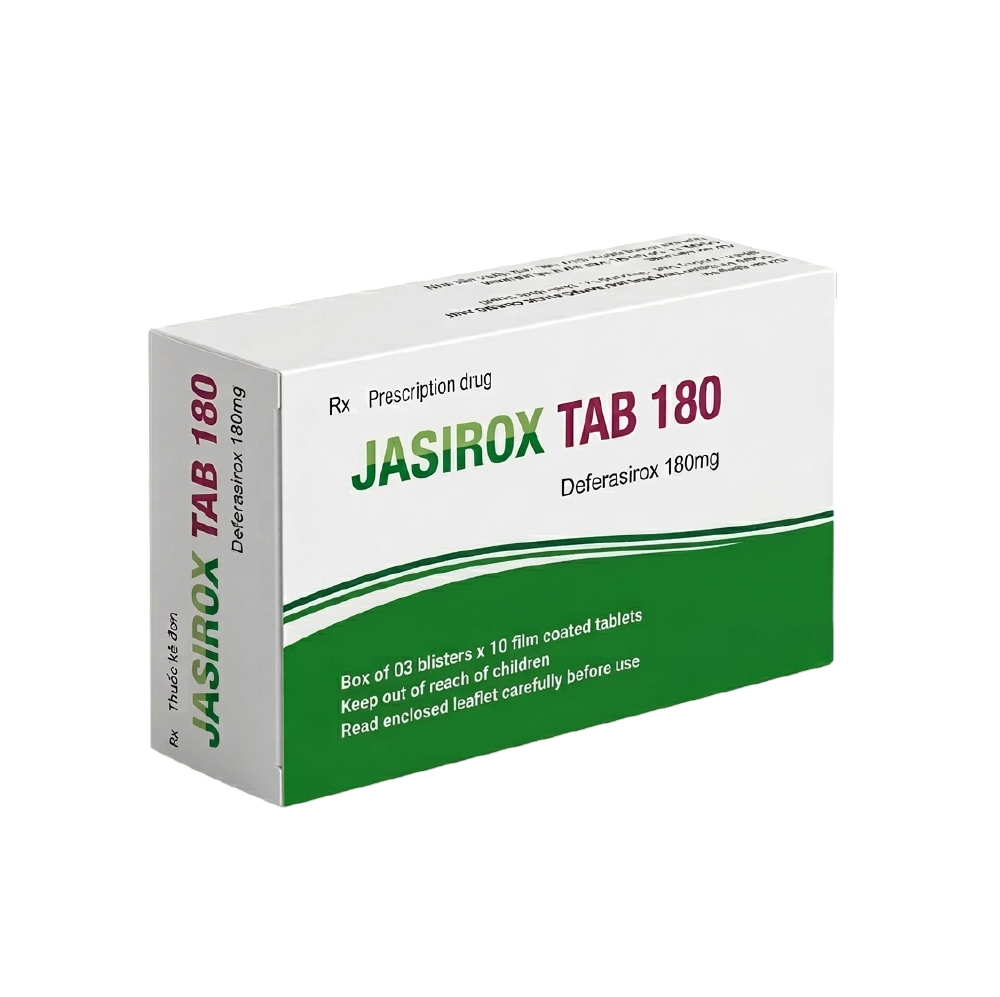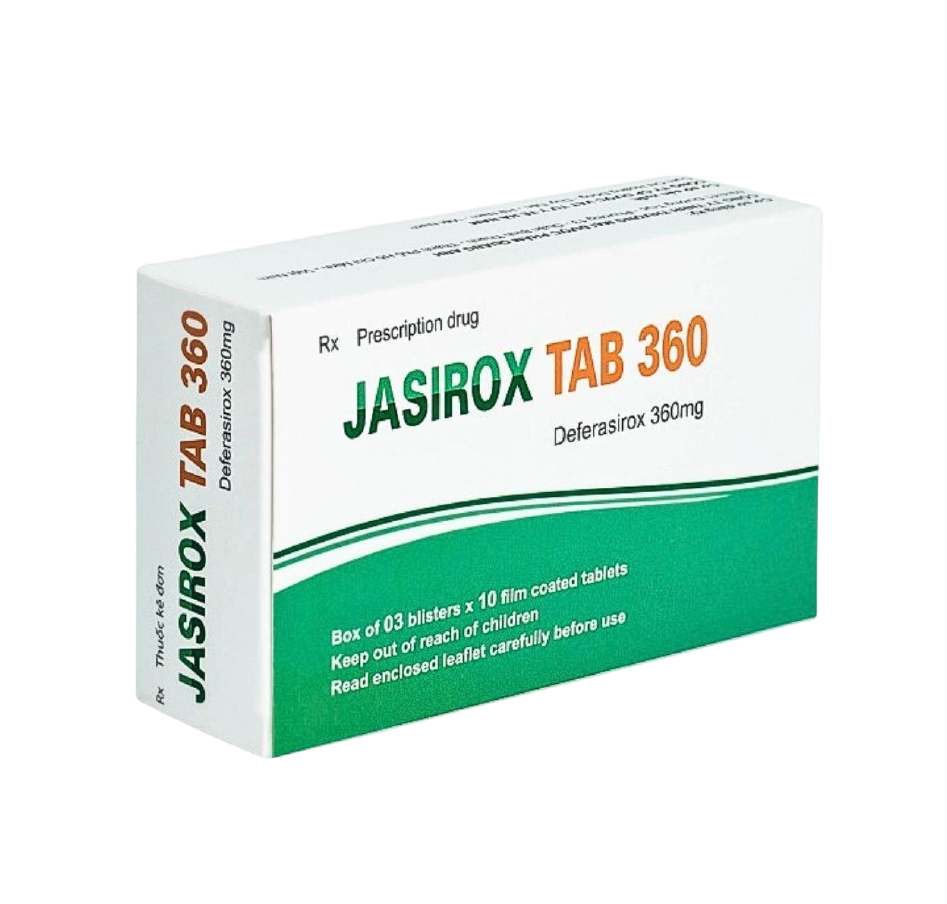
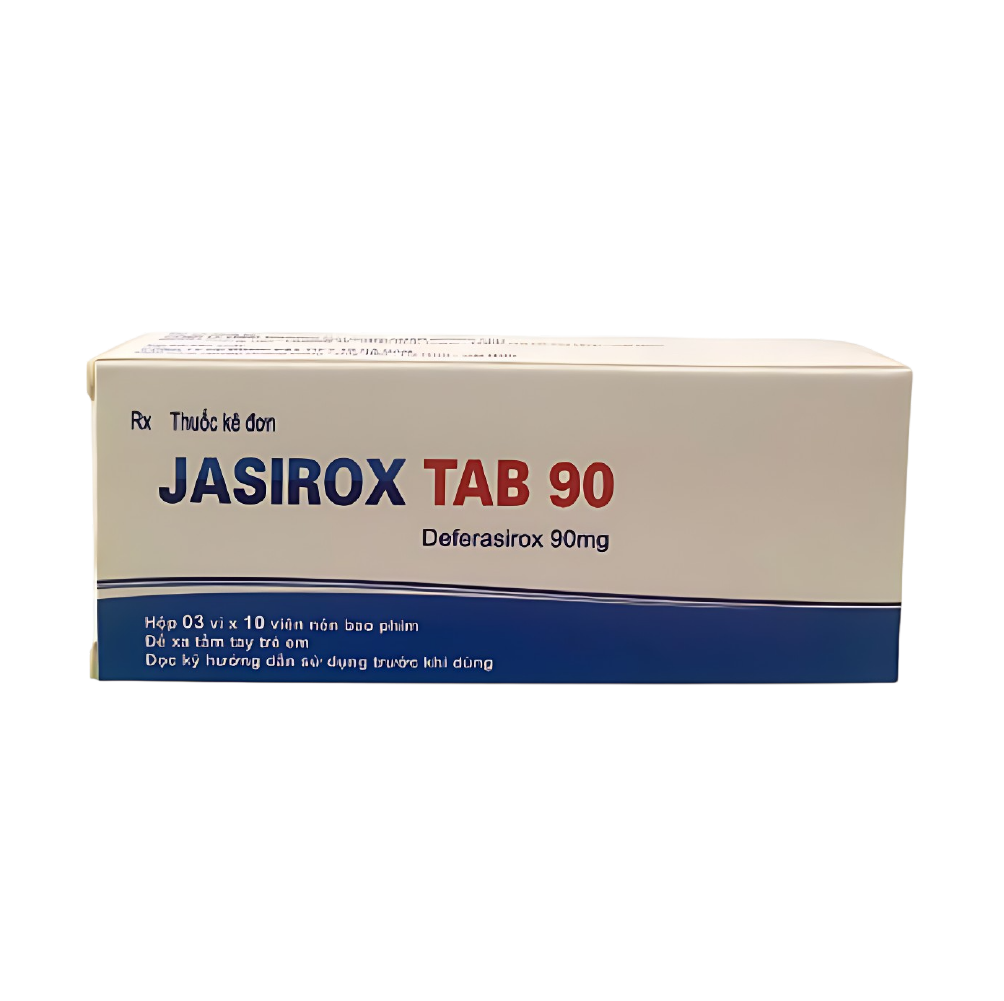
 +
+ Product Information
INDICATIONS
Chronic iron overload in patients with:
- β-thalassemia major with:
- Frequent blood transfusions (≥ 7 mL packed red blood cells/kg/month) in patients ≥ 6 years of age; or
- Patients aged 2–5 years who are contraindicated to deferoxamine or inadequately treated with deferoxamine; or
- Infrequent transfusions (< 7 mL packed red blood cells/kg/month) in patients ≥ 2 years of age who are contraindicated to deferoxamine or inadequately treated with deferoxamine.
- Other anemias (≥ 2 years of age) in patients who are contraindicated to deferoxamine or inadequately treated with deferoxamine.
- Non–transfusion-dependent thalassemia syndromes with liver iron concentration ≥ 5 mg Fe/g dry weight and serum ferritin > 300 mcg/L (≥ 10 years of age).
CONTRAINDICATIONS
- Hypersensitivity to any component of the product.
- High-risk myelodysplastic syndromes and malignancies where chelation therapy is not expected to be beneficial.
- Creatinine clearance (ClCr) < 40 mL/min or serum creatinine > 2 × the upper limit of normal.
- Poor performance status.
- Advanced malignancy.
- Platelet count < 50 × 10⁹/L.
DOSAGE AND ADMINISTRATION
Adults with iron overload
- Initial dose: 20 mg/kg once daily.
- Maintenance dose: 20–40 mg/kg/day.
- Maximum dose: 40 mg/kg/day.
Adults with thalassemia
- Initial dose: 10 mg/kg orally once daily.
Pediatric patients with iron overload (≥ 2 years)
- Initial dose: 20 mg/kg once daily.
- Maintenance dose: 20–40 mg/kg/day.
- Maximum dose: 40 mg/kg/day.
Pediatric patients with thalassemia
- Initial dose: 10 mg/kg orally once daily.
Dose should be rounded to the nearest whole tablet strength.
ADVERSE REACTIONS
- Headache.
- Gastrointestinal disorders: diarrhea, constipation, vomiting, nausea, abdominal pain, abdominal distension, dyspepsia.
- Increased transaminases.
- Rash, pruritus.
- Increased serum creatinine.
- Proteinuria.
- Renal tubular disorders in pediatric and adolescent patients with β-thalassemia and serum ferritin < 1500 mcg/L.
- Severe acute pancreatitis in patients with or without prior biliary disease.
DRUG INTERACTIONS
- Strong inducers of UDP-glucuronosyltransferase (e.g., rifampicin, phenytoin, phenobarbital).
- Food.
- Midazolam.
- Aluminum-containing antacids.
- NSAIDs, corticosteroids, oral bisphosphonates, anticoagulants.
Use with caution with:
- Drugs metabolized by CYP3A4 (e.g., ciclosporin, simvastatin, hormonal contraceptives).
- Repaglinide and other CYP2C8 substrates (e.g., paclitaxel).
- Theophylline and other CYP1A2 substrates.