 +
+ Product Information
COMPOSITION
Each film-coated tablet contains:
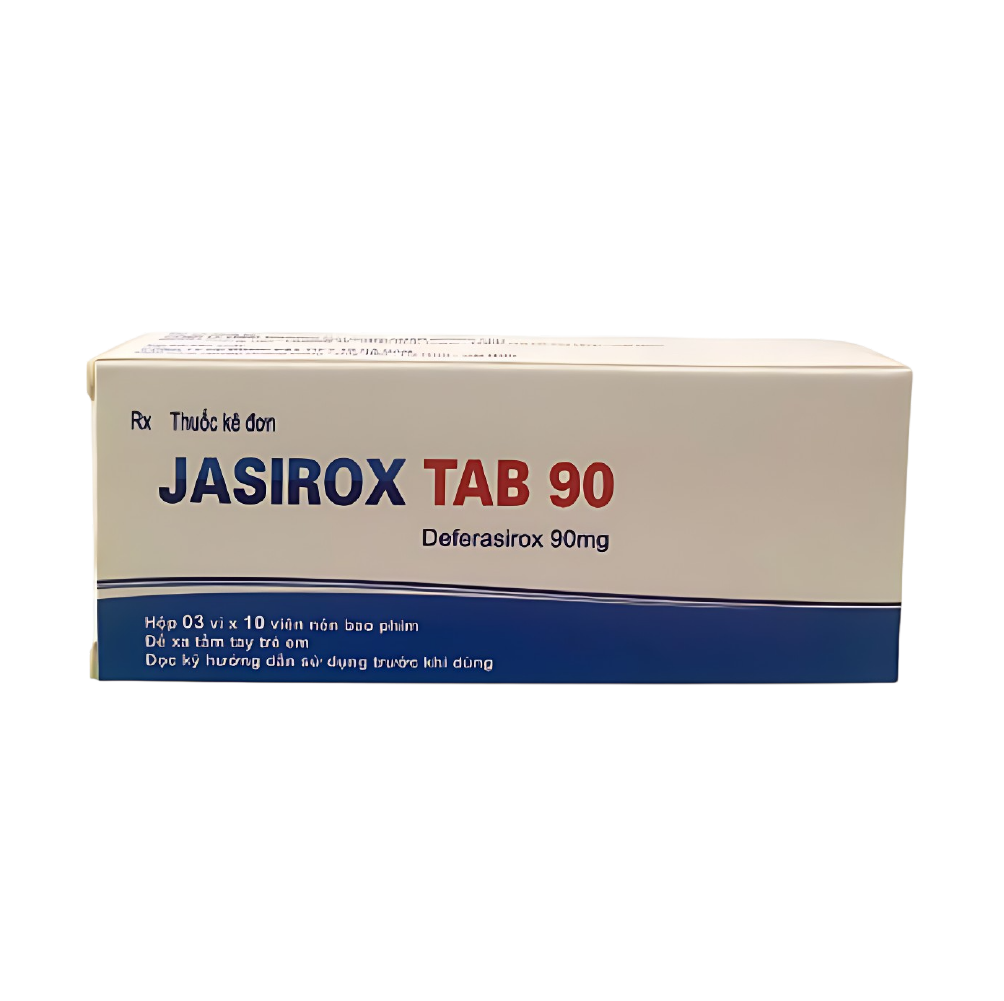
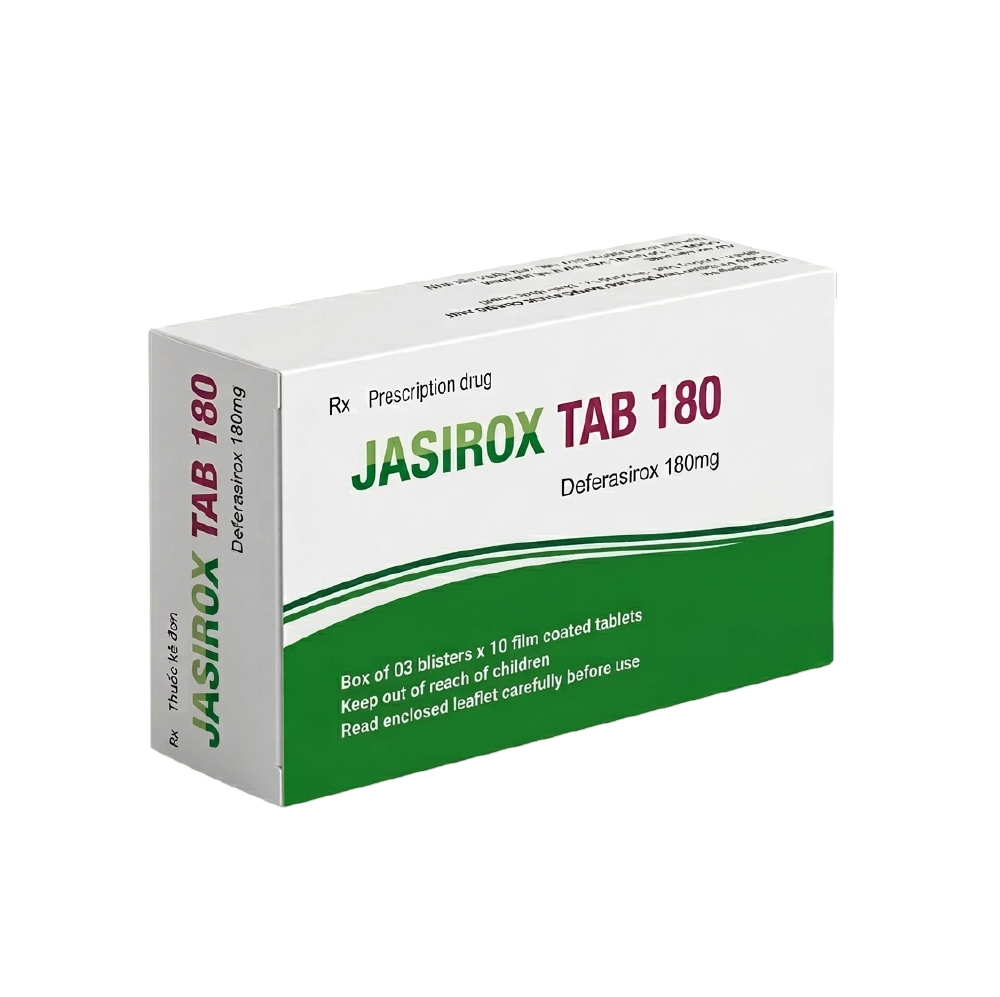
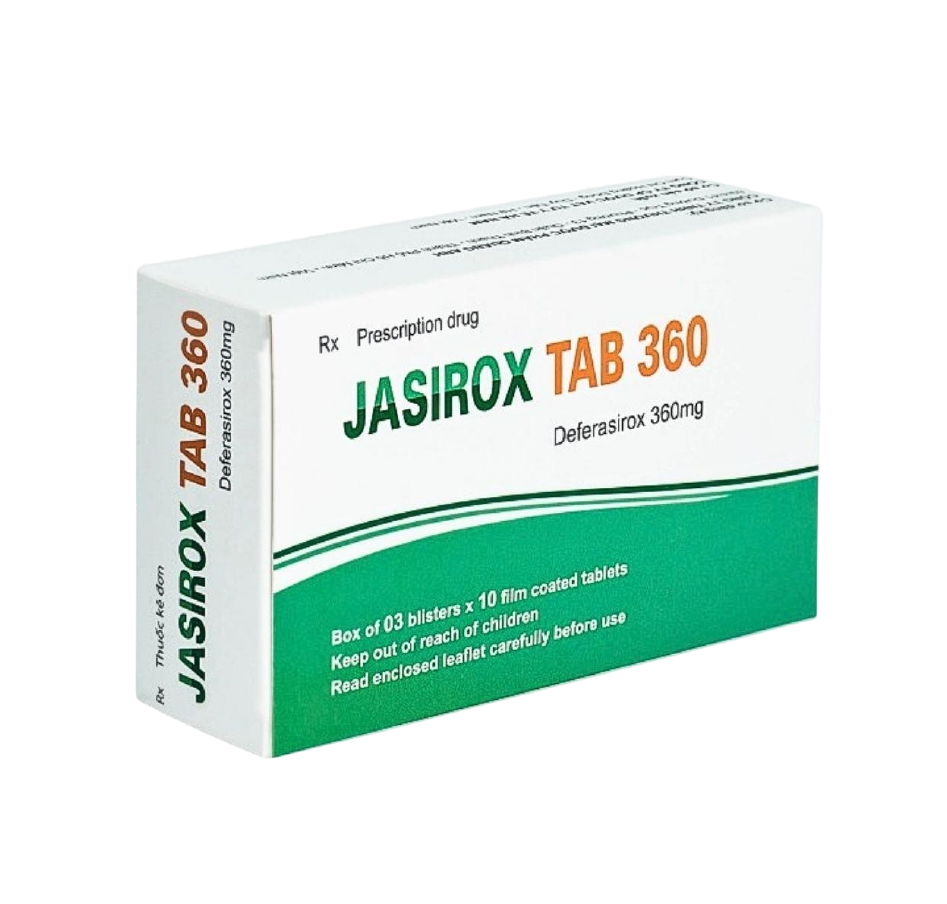
- Deferasirox 360 mg
Excipients: q.s. to one tablet.
INDICATIONS
- Treatment of chronic iron overload due to frequent blood transfusions in patients with β-thalassemia major aged ≥ 6 years.
- Treatment of chronic iron overload due to transfusions when deferoxamine therapy is contraindicated or inadequate in the following patients:
- Pediatric patients (2–5 years) with β-thalassemia major and iron overload due to frequent transfusions.
- Adult and pediatric patients (≥ 2 years) with β-thalassemia major and iron overload due to infrequent transfusions.
- Adult and pediatric patients (≥ 2 years) with other transfusion-dependent anemias.
- Treatment of chronic iron overload requiring chelation therapy when deferoxamine is contraindicated or inadequate in patients with non–transfusion-dependent thalassemia syndromes aged ≥ 10 years.
DOSAGE AND ADMINISTRATION
Adults – Transfusional Iron Overload
- Initial dose: 14 mg/kg once daily.
- Higher initial dose: 21 mg/kg/day for patients requiring significant iron reduction or receiving > 14 mL/kg/month of packed red blood cells (≈ > 4 units/month in adults).
- Lower initial dose: 7 mg/kg/day for patients not requiring significant iron reduction or receiving < 7 mL/kg/month (≈ < 2 units/month).
Dose adjustment:
Adjust in steps of 3.5–7 mg/kg based on individual response and treatment goals.
- If serum ferritin remains > 2,500 µg/L without a downward trend, doses up to 28 mg/kg/day may be considered.
- Reduce dose once adequate control is achieved.
- When serum ferritin reaches 500–1,000 µg/L, reduce dose accordingly.
- Consider interruption if serum ferritin falls below 500 µg/L.
Non–Transfusion-Dependent Thalassemia
- Initial dose: 7 mg/kg/day.
- Increase dose every 3–6 months (in steps of 3.5–7 mg/kg) if:
- Liver iron concentration (LIC) ≥ 7 mg Fe/g dry weight, or
- Serum ferritin > 2,000 µg/L without decreasing trend.
- Do not exceed 7 mg/kg/day if LIC is not assessed or ferritin ≤ 2,000 µg/L.
- Reduce dose to ≤ 7 mg/kg/day when LIC < 7 mg Fe/g dry weight or ferritin ≤ 2,000 µg/L.
- Discontinue treatment when adequate iron levels are achieved:
- LIC < 3 mg Fe/g dry weight or
- Serum ferritin < 300 µg/L.
Pediatric Population (2–17 years)
- Same dosing as adults for transfusional iron overload.
- Children aged 2–5 years may require higher doses due to lower exposure; however, initial dosing should be the same as in adults with subsequent adjustment.
- In non–transfusion-dependent thalassemia, dose should not exceed 7 mg/kg/day.
Method of Administration
Deferasirox should be taken once daily, preferably at the same time each day, either on an empty stomach or with a light meal.
Missed Dose
If a dose is missed, take it as soon as possible. If it is close to the next dose, skip the missed dose and continue as scheduled. Do not double the dose.
Overdose
There is no specific antidote. Treatment is symptomatic and supportive.
CONTRAINDICATIONS
- Hypersensitivity to deferasirox or any excipient.
- Concomitant use with other iron chelation therapies (safety not established).
- Estimated creatinine clearance < 60 mL/min.
- Estimated GFR < 40 mL/min/1.73 m².
- High-risk myelodysplastic syndromes.
- Platelet count < 50 × 10⁹/L.
ADVERSE REACTIONS
Common:
- Headache.
- Gastrointestinal disorders: diarrhea, constipation, vomiting, abdominal pain, abdominal distension, dyspepsia.
- Increased transaminases.
- Rash, pruritus.
- Increased serum creatinine.
Uncommon:
- Dizziness.
- Cataract.
- Hearing impairment, laryngeal pain.
- Gastrointestinal bleeding, gastric/duodenal ulcer, hepatitis, gallstones.
- Pigmentation disorders, renal tubular disorders (Fanconi syndrome).
Rare:
- Optic neuritis, esophagitis.
- DRESS (Drug Reaction with Eosinophilia and Systemic Symptoms).
- Edema, fatigue.
Frequency not known:
- Thrombocytopenia, anemia, leukopenia.
- Hypersensitivity reactions (including anaphylaxis, angioedema).
- Metabolic acidosis, gastrointestinal perforation, acute pancreatitis, hepatic failure.
- Anxiety, sleep disturbances.
- Stevens–Johnson syndrome, vasculitis, urticaria, erythema multiforme, alopecia, toxic epidermal necrolysis.
- Acute renal failure, interstitial nephritis, nephrolithiasis, renal tubular necrosis.
DRUG INTERACTIONS
- High-fat meals increase Cmax (~29%).
- Deferasirox may be taken on an empty stomach or with a light meal.
WARNINGS AND PRECAUTIONS
- Monitor serum creatinine, creatinine clearance, and/or cystatin C before, during, and after treatment.
- Monitor liver function (transaminases, bilirubin, alkaline phosphatase).
- Not recommended in severe hepatic impairment (Child-Pugh Class C).
- Consider hyperammonemia in patients with unexplained mental status changes.
- Maintain adequate hydration, especially in patients with vomiting or diarrhea.
- Use with caution in high-risk patients (e.g., myelodysplastic syndromes) and elderly patients.
USE IN PREGNANCY AND LACTATION
- No adequate clinical data in pregnant women.
- Use only if clearly necessary.
- Not recommended during pregnancy; caution in breastfeeding.
EFFECTS ON ABILITY TO DRIVE AND USE MACHINES
May cause dizziness; caution is advised.
STORAGE
- Store below 30°C.
- Keep out of reach of children.